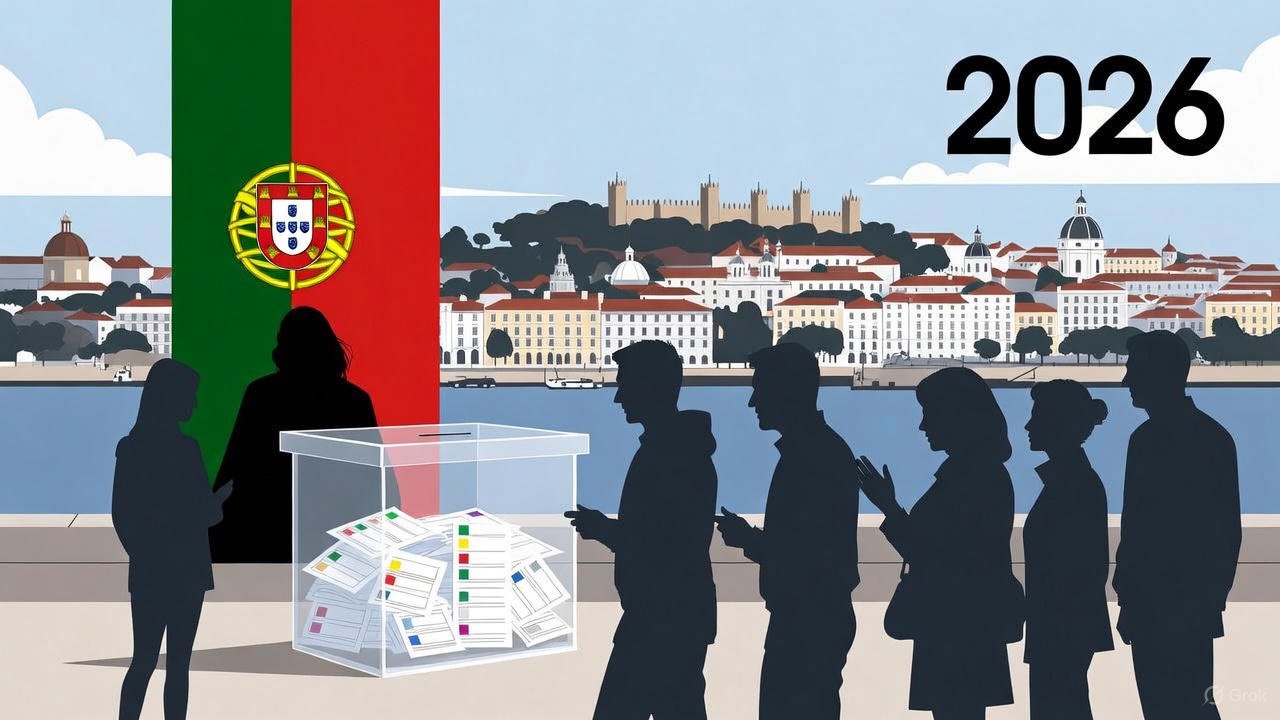
Portugal Presidential Election 2026
Portugal is preparing for a major political event: the Presidential Election of 2026. Millions of Portuguese citizens — at home and abroad — will vote to choose their next president. This election will take place early in the year, and it is expected to be one of the most competitive and talked-about elections in recent Portuguese history.
The first round of voting is scheduled for January 18, 2026, and if no candidate wins more than half of the votes, a second round (runoff) may be held on February 8, 2026.

The president of Portugal serves as the head of state and plays an important role in national unity, foreign policy and public life. While the president does not run the government every day, they have powers such as signing laws, representing Portugal internationally, and — in rare situations — dissolving the parliament and calling early general elections.
The current president, Marcelo Rebelo de Sousa, has reached the end of his second term and is not allowed to run again under the Portuguese Constitution. This means that a new leader will be chosen to represent Portugal for the next five years.
Election Date and Process
Portuguese presidential elections follow a two-round system:
- In the first round, all registered candidates compete.
- A candidate must receive more than 50% of the valid votes to win outright.
- If no one gets a majority, the top two candidates go to a second round, where the winner is chosen.
To run for president, a candidate must:
- Be at least 35 years old
- Be of Portuguese origin
- Collect at least 7,500 signatures from registered voters
- Submit their application to the Constitutional Court by the legal deadline
This system ensures that the president has broad support before taking office.
Major Candidates in 2026
Several well-known figures from Portuguese politics, civil society, and the military have entered the race or are expected to compete. Here are some of the key contenders:
Luís Marques Mendes
Luís Marques Mendes is a long-time politician associated with the Social Democratic Party (PSD). He has served in political leadership roles in the past and remains a major figure in Portuguese politics. In early election forecasts and predictions, he was often placed among the top competitors.
Henrique Gouveia e Melo
Henrique Gouveia e Melo is a retired admiral who became well-known nationwide for leading Portugal’s COVID-19 vaccination task force. His leadership during the pandemic won widespread respect, and he declared his candidacy on May 29, 2025. Gouveia e Melo is running as an independent candidate, meaning he is not officially supported by a major political party.
António José Seguro
The Socialist Party (PS) — one of Portugal’s main political parties — has signaled support for António José Seguro, a veteran political leader within the party. His candidacy represents the centre-left segment of Portuguese politics. (
André Ventura
André Ventura, leader of the right-wing party Chega, has also entered the race. Ventura is known for his strong opinions on immigration and national security, and his campaign has drawn significant media attention both positive and negative. In late December 2025, a Lisbon court ordered him to remove campaign posters found to be discriminatory against the Roma community during the campaign period.
Other parties such as the Liberal Initiative (IL) and independent politicians have thrown their hats into the ring as well. João Cotrim de Figueiredo, a former leader of IL, is among these candidates.
In total, more than a dozen individuals submitted official applications to run, though only those who met the Constitutional Court’s requirements will appear on the ballot. (
Polls and Predictions
As the election approaches, public opinion polls show a fragmented field with no clear early winner. This means that the race could be very close, with several candidates receiving similar levels of support. Analysts suggest that the outcome depends heavily on campaign performance, debates, and voter turnout in January 2026.
Some prediction markets and polls released in 2025 showed early estimations of candidate chances, with names like Luís Marques Mendes appearing as prominent contenders. However, these figures are not official results and can change as the campaign continues.
Because no candidate is expected to win a majority in the first round, many analysts anticipate that a second round will likely be needed to determine the final winner. This situation would make every vote in the first round especially important, as small differences in support could decide which two candidates move forward.
What Issues Matter to Voters
Portuguese voters are focusing on several important national topics in this election:
Economy and Cost of Living
Many voters are concerned about jobs, inflation, and the rising cost of living. Candidates are discussing how to strengthen the economy and support families and small businesses.
Justice and Security
Issues such as crime, policing, and rule of law are important topics in the campaign. Candidates have different ideas about how to improve national security while protecting civil rights.
Democracy and Representation
Some voters are looking for leaders who can unify the country and bridge political divisions after recent years of government instability.
Portugal in the World
Foreign relations and Portugal’s role in the European Union and international affairs are also being discussed, especially in a world with rising global challenges.
Who Can Vote?
Anyone registered in the Portuguese electoral system — including Portuguese citizens living abroad — can vote in the presidential election. Many Portuguese communities around the world will organize voting centers so that overseas residents can participate.
How the President Is Elected
The election system is designed to reflect the will of the people:
- All votes are counted nationwide.
- If no one gets more than 50% in the first round, the top two go to a runoff election.
- The second round winner becomes President of the Republic and serves a five-year term.
This two-stage process aims to ensure that the president has broad support from voters across Portugal.
Important Dates to Remember
- January 18, 2026 — First round of voting
- February 8, 2026 — Second round (if needed)
The 2026 Portuguese presidential election is shaping up to be a major event in the country’s democratic history. With a wide range of candidates and a diverse field, voters are facing important choices about the future direction of Portugal. The election process — including the possibility of a second round — highlights the democratic strength of the nation and the importance of civic participation.
As election day draws closer, more debates, campaigns, and public discussions will shape voter opinions. Millions of Portuguese citizens are expected to take part, both within Portugal and abroad. The result of this election will determine the next head of state and set the tone for the country’s future leadership.

Leave a Reply to Why Learning Portuguese Is Important for Immigrants in Portugal Cancel reply