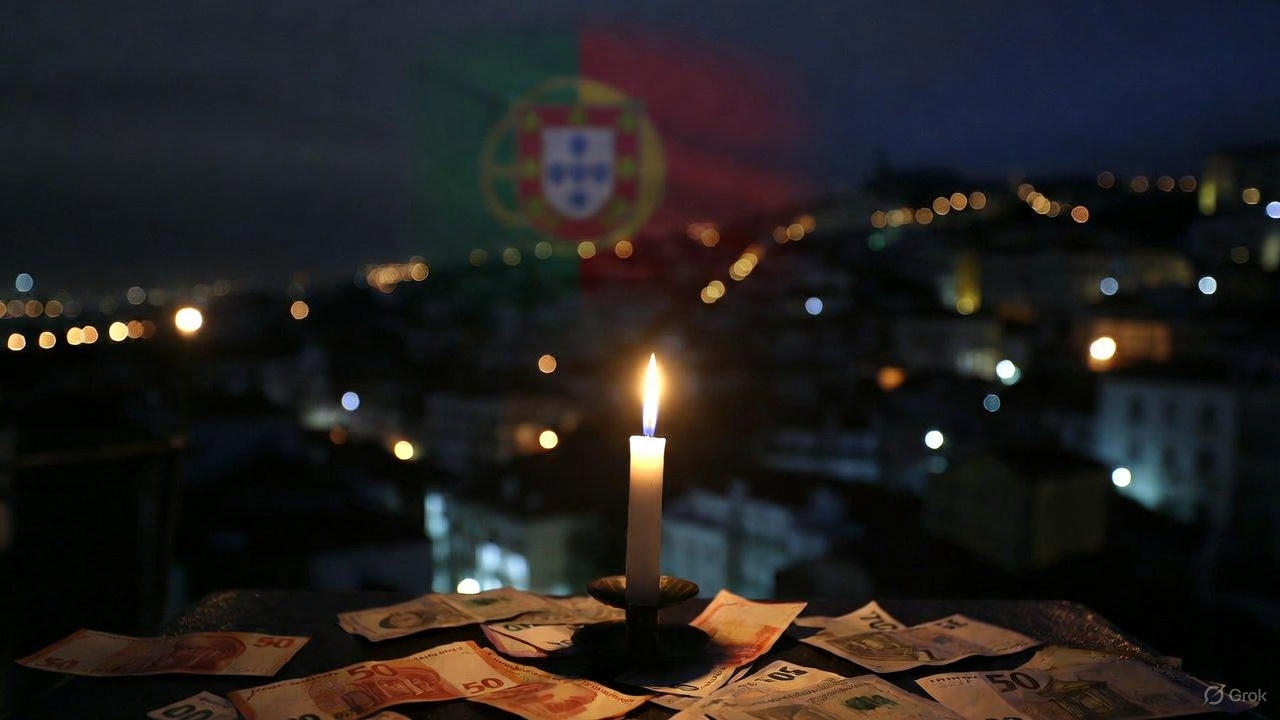
Portugal experienced a major power blackout on 28 April 2025. This incident is known as an “Apagão” (blackout). It caused serious problems for people across the country.
During the blackout, card payments did not work. ATM machines were closed, and many people did not have cash with them. Because of this, they could not even buy daily necessities.
After this incident, the Bank of Portugal officially advised people for the first time to keep some cash at home. This advice was published in an official bulletin on 31 October.
Let us understand what happened and why this advice is important.
What Was the Blackout and What Happened?
On 28 April 2025, electricity stopped completely in Portugal. The blackout lasted for several hours. People faced many difficulties.
The biggest problem was payments. Today, most people pay using bank cards or mobile phones. But when the power went out, payment machines stopped working.
- Card payments did not work in shops
- ATM machines stopped
- People could not withdraw money
- Many people had no cash
As a result, people could not buy food, milk, or even water. This incident is still fresh in people’s minds. It forced the government and banks to think seriously about emergency situations.
The Bank of Portugal said that people should be better prepared for such crises.
What Did the Bank of Portugal Say?
The Bank of Portugal (Banco de Portugal) officially stated in a document that people should keep some physical cash available at home.
This advice was published in a bulletin on 31 October.
After studying the effects of the blackout, the bank found that:
- Electronic payments failed
- ATM machines were not working
- People without cash could not make purchases
Because of this, the bank advised citizens to keep a small amount of cash at home. This cash can help during emergencies. The bank said this is a smart and safe precaution.
What Is Happening in the Rest of Europe?
Portugal is not alone. Many European countries already give similar advice.
They recommend keeping 70 to 100 euros per person at home. This amount is considered enough for 72 hours (3 days) of basic expenses, such as:
- Food
- Drinking water
- Medicines
- Public transport
In emergency situations, electricity, internet, and banking systems can all stop working. In such moments, cash is the only reliable option.
Portugal has now adopted the same approach. The Bank of Portugal said this is good preparation and people should follow it.
What Warning Did the Police Give?
The Portuguese police (PSP) also issued a warning. They said keeping too much cash at home can be dangerous.
The main risks are:
- Theft risk: If thieves know there is cash in a house, it can attract crime
- Fire or disasters: Cash can be destroyed in fires or floods
- Other risks: Cash can be lost or damaged
The police advised people to:
- Keep only a necessary amount of cash
- Store it in a safe place, such as a safe or locker
- Do not tell others about it
The police said the bank’s advice is good, but security should not be ignored. Balance is important.
Why Is This Advice Important?
Today, most systems are digital. People use cards, mobile payments, and online banking. Cash is used less.
However, during emergencies, digital systems can fail completely. When that happens, only cash works.
This advice helps people stay prepared. It is not only for Portugal. Other countries can also face:
- Floods
- Earthquakes
- Cyberattacks
- Power failures
Keeping some cash is a smart safety step.
What Should You Do?
Here are some simple steps you can follow:
- Keep cash at home:
Keep 70 to 100 euros per family member, enough for 3 days - Store it safely:
Keep cash in a safe or locker and do not tell anyone - Emergency kit:
Keep cash with water, food, and medicines - Use digital daily, but stay prepared:
Use cards and phones daily, but do not forget cash
This advice teaches us that technology and systems can fail at any time. Preparation is our strongest protection.
The Portugal blackout is a lesson for everyone. Keep a small amount of cash at home, stay safe, and stay prepared.
Be ready. Be safe.

Leave a Reply